Okay here it goes, this is my over due weekly review. Its over due because I hate writing, I’ll explain more on why I hate writing another time. I’ll start off with what i’m doing for the year and that is a multi textual children’s book which is about foxes, the book is targeted for children and children with specific learning difficulties/ disabilities, I want to include braille and squeakers for children who are blind. Thats what I want to do for the year and hope to achieve at least a pitch on what I have been intended to do which could be a A3 double spread page of the fox in an environment with the multi-textures involved and having my case studies included and making sure i prove that this topic has been deer to my heart and wanted to show i’m dedicated, this book is for children and children with specific needs so i’m not going to be ignorant and go into this with no knowledge and understanding.
From all that, I’ll mention what i’m doing for semester 1, and from that I did my first module which was a reflection report, I didn’t like it if I’m honest the work i did seemed extremely hard for me, however i did manage to do it and I seemed confident enough to hand it in. Bare in mind I did get support with the academic support team on campus, Which i’ll explain further in a different blog. Talking about blogs I did that this year, I started up wordpress and personally its going okay, just making sure that i have a kick up the backside with updating my weekly reflections and blog post as its a 3rd of my degree and i cant slack on that. other than that i am enjoying it, i feel quick professional writing up blogs and posting my weekly reviews, keeps me organised which is what i need to do for when i become a teacher.
After the blogs, let me see what did I do? Oh I did my proposal and treatment and let me tell you it was a the most stress worthy month of my academic life. I did struggle a lot, but I did get so much support and help with my written work and the presentation at the end of the module. I personally enjoyed exploring what i’m doing and how I was going to go from A to B to an end product at the end of the year. I made sure I showed my passion and dedication which I have done since then. This included my artist research with for now i have bullet pointed, I know thats bad but its was only because I do struggle with words. Which hopefully be sorted for me to do easily and independently, I’ll explain more in a different blog that I mentioned earlier. However the research is going well and its on going each time I come across in my journey.
Now on the talk of research, Harvard Referencing. That was a nightmare to get my head round but thank goodness I can do it. In classes I must have half a book full of notes and tricks on Harvard referencing and how to do it, it want until the last few weeks on my proposal and treatment I got the hang of how to reference and image or piece of text and the difference from a website to a book, urgh. It was tough but thankfully I got the gist of it and I am able to do it. From that I was able to create a bibliography which is still on going but its easier to do when you know how to Harvard reference, the trick i found that made it easier is when i have a source I just make sure i reference it straight away and it saves time in the long run on trying to find it again and reference it later down the line.
I spoke about the presentation which I did and I must say I loved it, I like being able to speak passionately about my product and being organised which showing a binder that includes my presentation and a copy of my proposal and treatment so that if they wanted to ask questions I could reference with the proposal and treatment which they had a copy of and if they felt like they were getting lost with the presentation it was printed on paper for them to look at and follow. I found this useful and easier for me and the panel.
After all that i started doing my statement of intent, its on going and i’m getting help with it from off the academic support team. The statement of intent is basically taking my proposal and treatment and shorten it down into a document of a minimum 1000 words. I’m getting comfortable on doing this and knowing my help is there. The stress behind it isn’t as bad as I have the help, however i’m just naturally a stress head.
On a Friday the class took part of a screen printing class, It went well as the start. A few disagreements on what i wanted for the trees to look like for the image (I went with trees to link with my book theme and environments as i mentions in the first semester I wanted to do environments and character building) but we came up with a design and went with it, the price was a little shock factor for a Plastic green screen and a piece of felt with my image on but I understand the costs of separate materials and ink and printing. I can be really expensive. The method that was used (which I also documented in my sketchbook)
- starts with creating a design which I did on illustrator and i came up with a tree design to fit with what I wanted to do for my environments for the book, I added a gradient on Photoshop and came up with a button like effected.
- I then sent the file off to a printer which prints the design out on a specific fabric which you can print with, by this i mean the ink can transfer through the material which prints the design.
- I then attached a plastic screen frame to the fabric with the design on. by using double sided tape on the plastic part and then once the fabric was on I placed heavy duty tape to secure the fabric and plastic together. This creates the screen.
- I then place side by side paper which I wanted to transfer the image onto, to get the image onto the paper I had to use a form of paint which as acrylic and acrylic medium to thin the paint into a ink formula (thats what I meant by using ink)
- I then placed the screen down portrait on to paper and added the ink formula along the top, I then used a squeegee at a 45 degree angle to spread the ink. I then lifted the screen and hey presto the image had been transferred through.
- I repeat the steps until i’m satisfied with the images i’ve produced.
Here is an image of the best one I’ve created which i liked the most, bare in mind you first couple will bleed with the ink, however my work got ruined because the screen got damaged in the cleaning process, to clean the screen you need water and a soft sponge, I on the other hand pressed too hard on the screen and made a dash rip which was noticeable until I printed a few images.
Due to this i tried the vinyl method with the screen print which starts off like this
- I places a glue substance on the screen which is placed portrait on paper that I wanted to use
- i then squeegeed the glue substance at a 45 degree angle to transfer the image onto the paper.
- once done that let the glue dry and wash your screen with a cleaning substance that really stinks, if you have asthma please be careful.
- once dried place a shiny vinyl of your choice above and take it to the hot press, leave for 10 seconds and then lift up the hot press by via handle.
- After this is done let it cool down and peel off the vinyl, this will then leave a cool image and shiny effect on the paper with your design.
Here is what the image turned out, i loved how the vinyl make a rise in the image which gave me an idea for braille, I might just have too look further into methods.
I placed all my screen prints in my sketch book, which lead me on doing mono printing, due to some of my research in artist named Jim Butler I came up with an idea for mono printing and watercolour idea with the tree design, I did this by
- Placing watercolour blotches where the tree tops would be and let then dry, because they don’t take that long 4to dry i decided to prepare for the mono printing.
- to start the mono printing I get a plastic A4 sheet and place an ink called block ink in a tray (only use a 50 pence piece amount of ink) and a roller and spreed the ink on the plastic A4 sheet. make sure its fully covered on a covered work space use newspaper for this or a dining table cover preferably waterproof (as ink goes everywhere).
- Then using the watercolour paper with the blotches face it blotched colour down on the ink and have a copy of the tree design facing up towards you (just note think of a mirror and reflect opposite when doing the watercolour and the ink transfer.
- once the papers and on the ink sheet, trace the outline or any shading ( I only traced the outline) be gentle and just take your time, as there no rush in how you do art.
- After its all traced lift up carefully and it’ll reveal a cool design.
Here is one that I like the most, I recorded my mono prints in my sketchbook, I loved how the images came out and I did it for a different approach to environments and using art techniques.
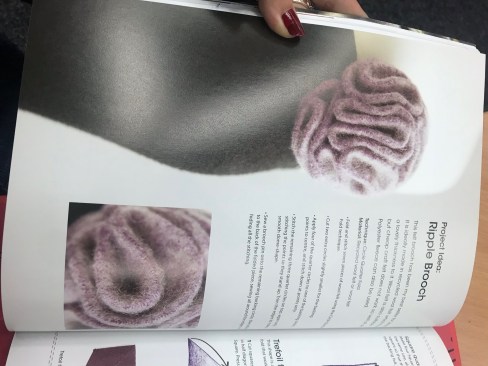
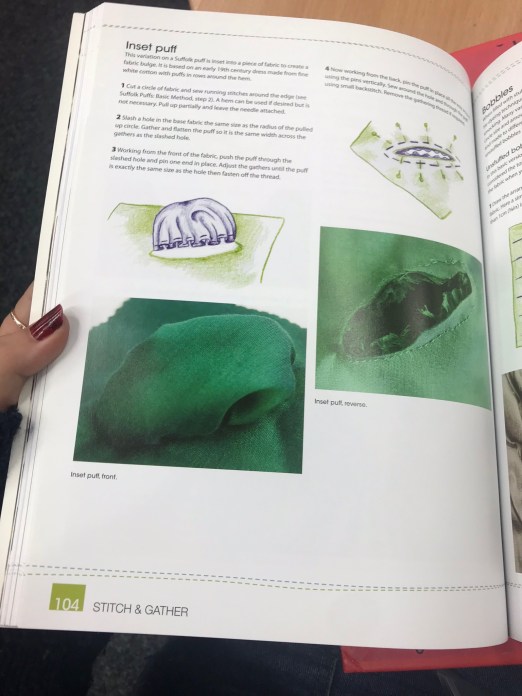
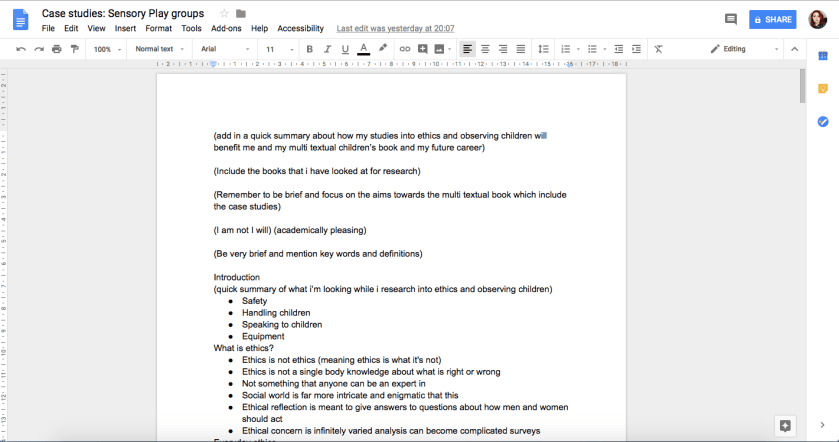
For my textures and textual case studies which I named Case studies: Sensory play groups. Are on going, I did a document and I did loads of research into ethics and what fabrics is good for kids and how observing children is important. I looked at books such as Ethics (Seedhouse, 2009), Seeing Young Children (Bentzen, 2005) and Fabric Manipulation (Singer, 2013). To find the right fabrics for me to use on a budget I looked on the Internet and found intertek website (Intertek.com, 2018). So far I’m doing good progress.
So far I have achieved, development into my environments, created a character and attached fabric to them, Collected a lot of research that is on going, completed a module, did a couple of experimental work within my sketchbook and started my case studies research and preparation.
Where am I at? I’m currently on track with progress into my multi textual children’s book and have a character and environment prepared.
My aims are now to carry on my former research and develop a case study which is suitable for children and children with specific learning needs, with a clear under standing on ethics and observing. Until next week. bye for now.
Rachel
🙂
Bibliography
Bentzen, W. (2005). Seeing Young Children A Guide To Observing and Recording Behaviour. 5th ed. Thompson Delmar Learning, p.55.
Intertek.com. (2018). Children’s Textile and Apparel Testing. [online] Available at: http://www.intertek.com/textiles/childrens-apparel-testing/ [Accessed 18 Nov. 2018].
Seedhouse, D. (2009). Ethics. 3rd ed. Chichester, Angleterre: Wiley-Blackwell, p.16.
Seedhouse, D. (2009). Ethics. 3rd ed. Chichester, Angleterre: Wiley-Blackwell, p.28. p.30.
Seedhouse, D. (2009). Ethics. 3rd ed. Chichester, Angleterre: Wiley-Blackwell, p.47. p.49.
Singer, R. (2013). Fabric Manipulation. F+W Media, pp.66, 104.

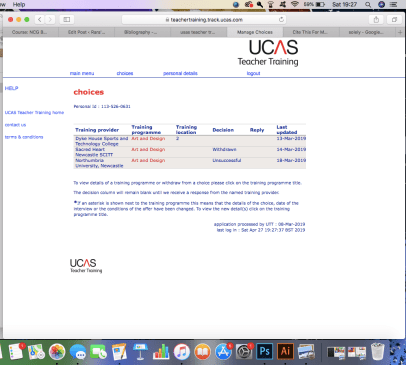 as I have show here. As you can also see I did attend my interview at Northumbria University but my experience there didn’t make me comfortable. The way they interviewed you didn’t make you feel prepared as their “Interview pack” was so hard to understand or know what they want from you. The ideal aspects that I gathered from them is that digital art doesn’t seem to be the highlight on their agenda. Seems as though I was the only illustrator in a room of 2 fine artists which by the way already attended the university. I found out that 2 days down the line I was unsuccessful. Not going to lie I was highly upset but luckily I applied for Newcastle College; Newcastle School Of Education.


 Rara's Blog